The requirements are public. The sequence is the hard part.
France publishes what it wants. What it does not publish is the order, the lead times, or which pieces depend on each other. That is the whole job, and it is what this does.
Read the guides, free
Every guide states what France requires, drawn from official government sources and dated so you can see when it was last checked. Nothing is behind a login, and nothing ever will be.
Tell us your situation once
Your route, your dates, who is coming with you, and what you have already gathered. It takes a few minutes and it is what turns a general requirement into your specific task list.
Work the list, dated from your move
Requirements become tasks counted back from the date you intend to arrive — so you find out an apostille takes weeks while there is still time to order one.
Ask when something is unclear
The assistant answers against your own file, not a generic FAQ. When the knowledge base cannot answer well, that question is logged and the gap gets researched and reviewed.
Inside the portal
What a member sees, screen by screen: the plan dated from your move, how to do each step, the letters drafted for you, and answers about your own case.
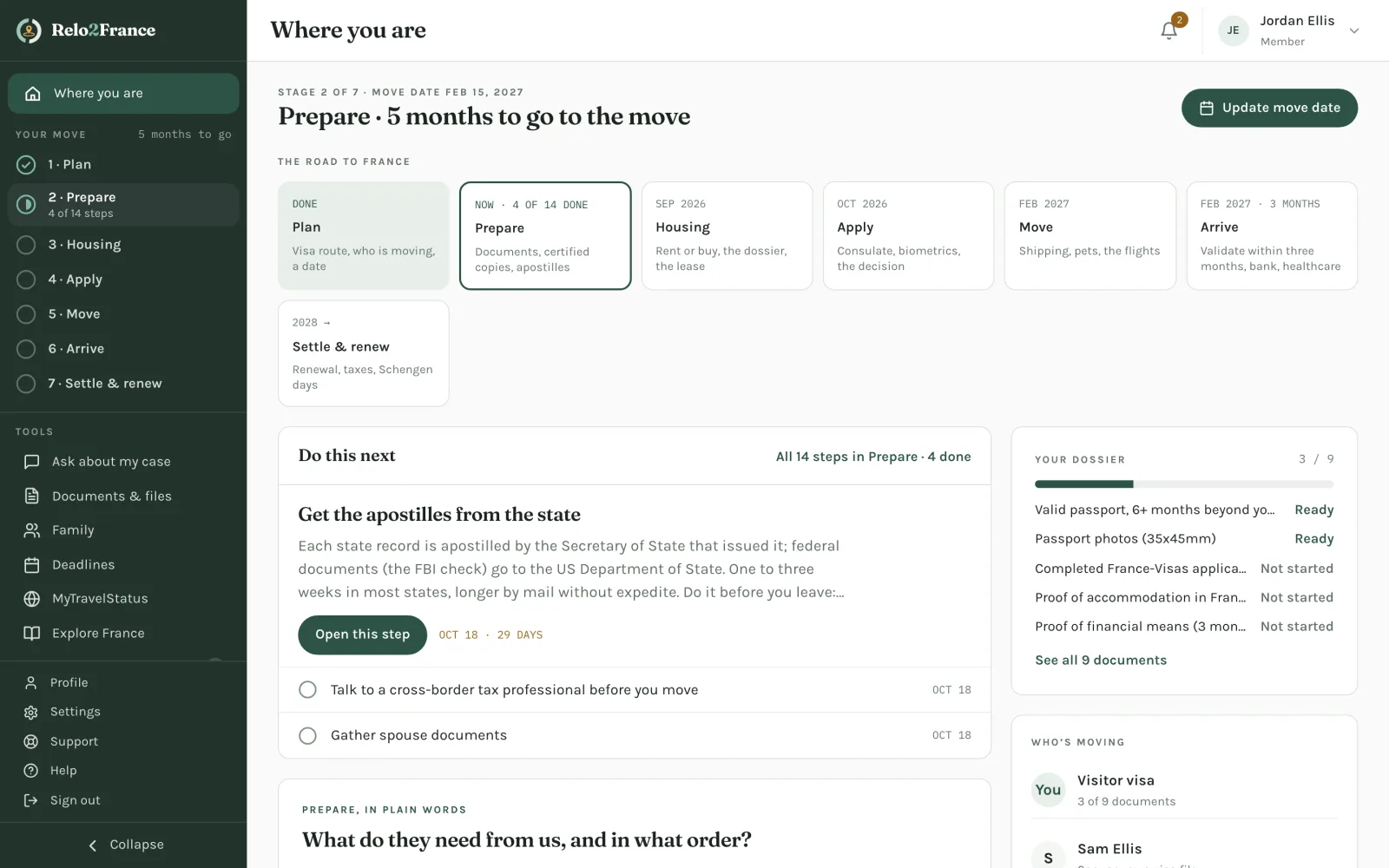
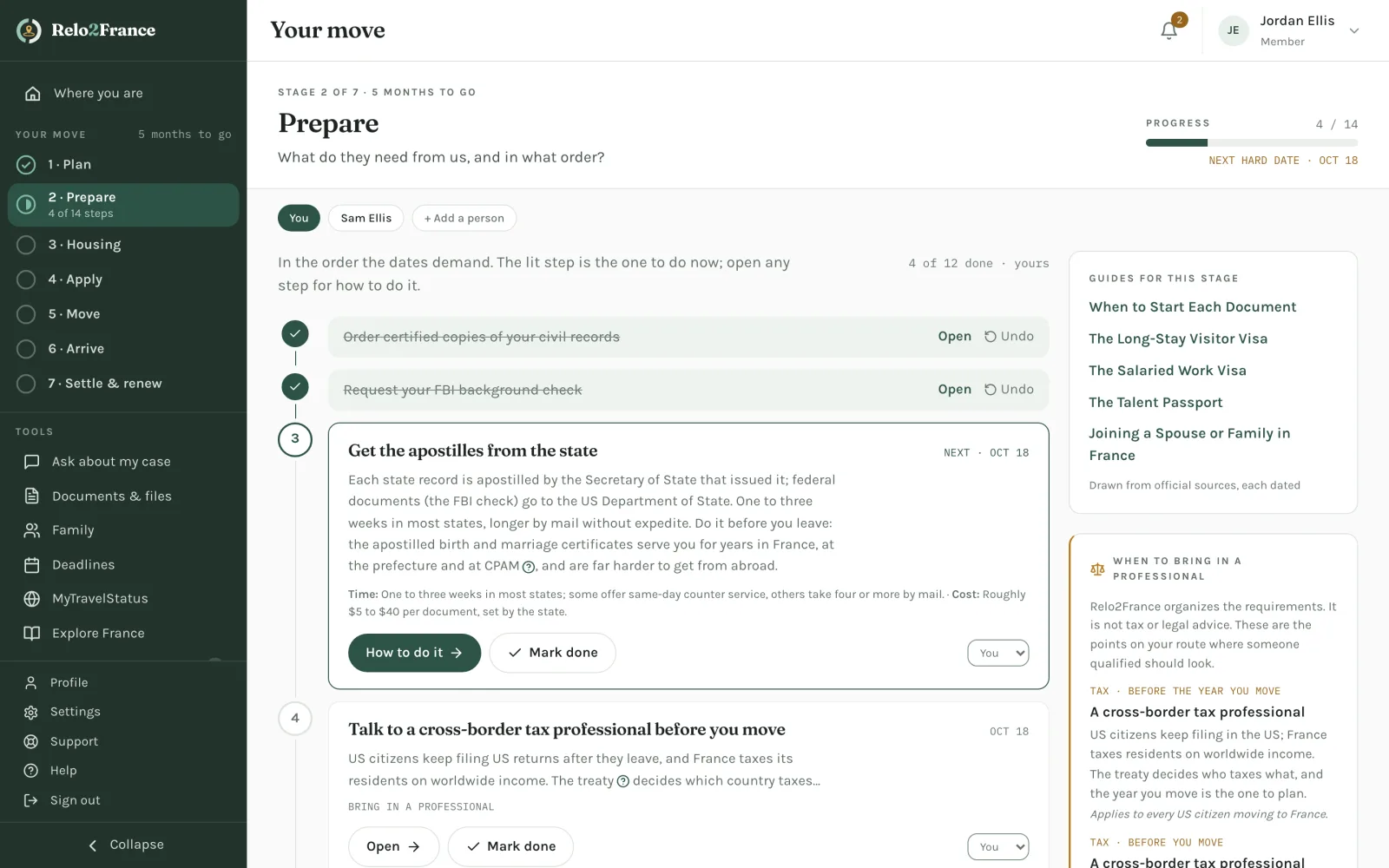
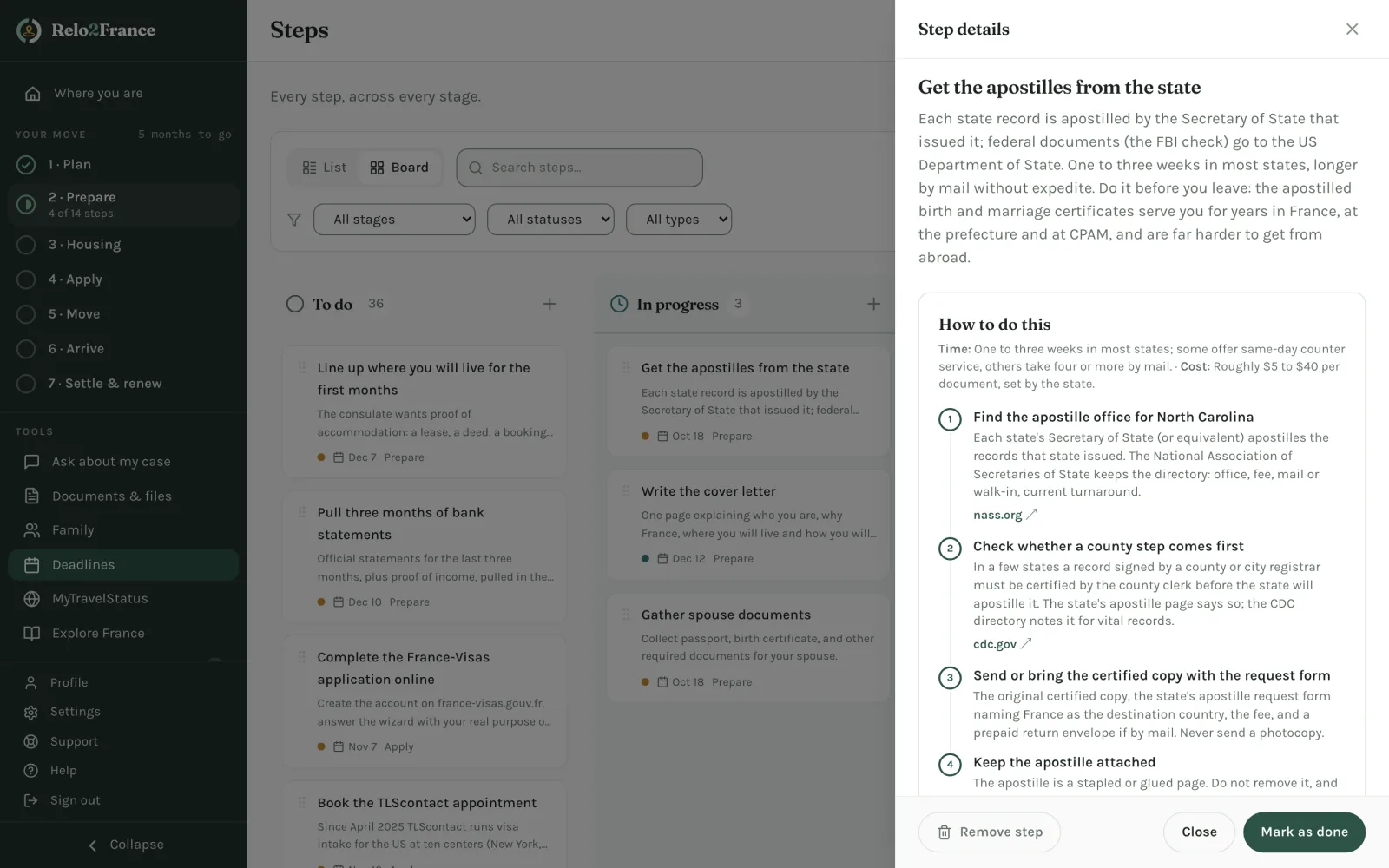
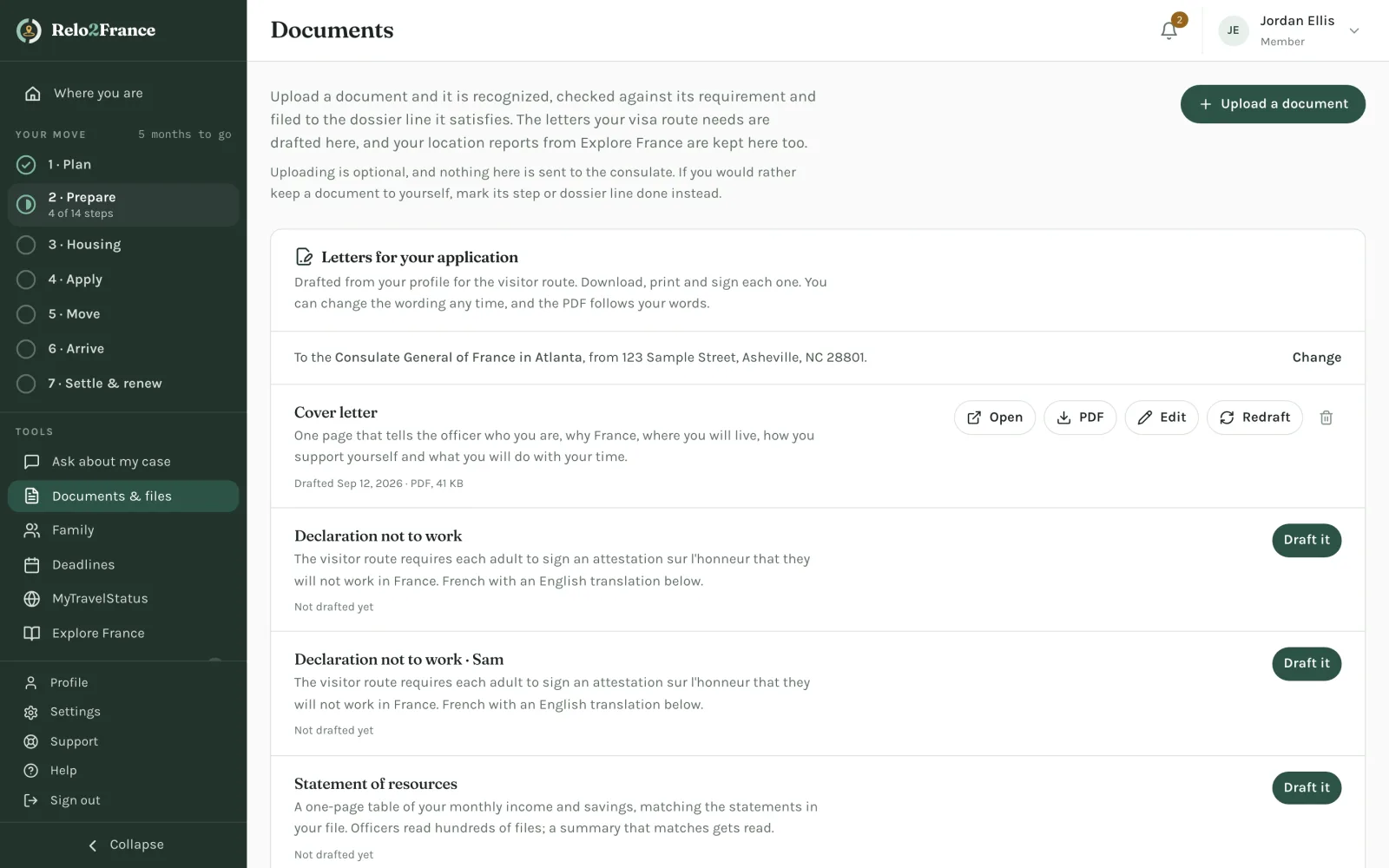
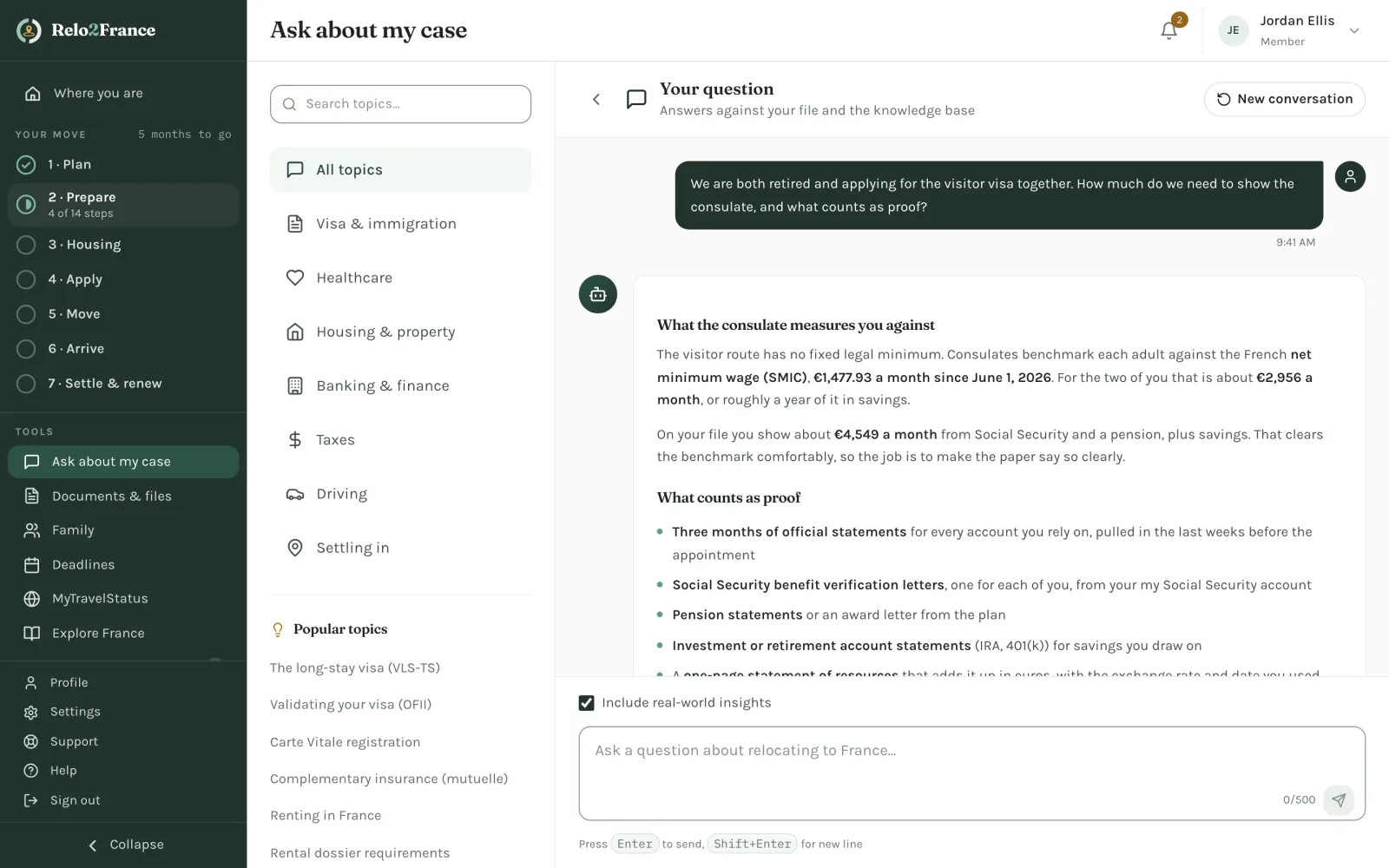
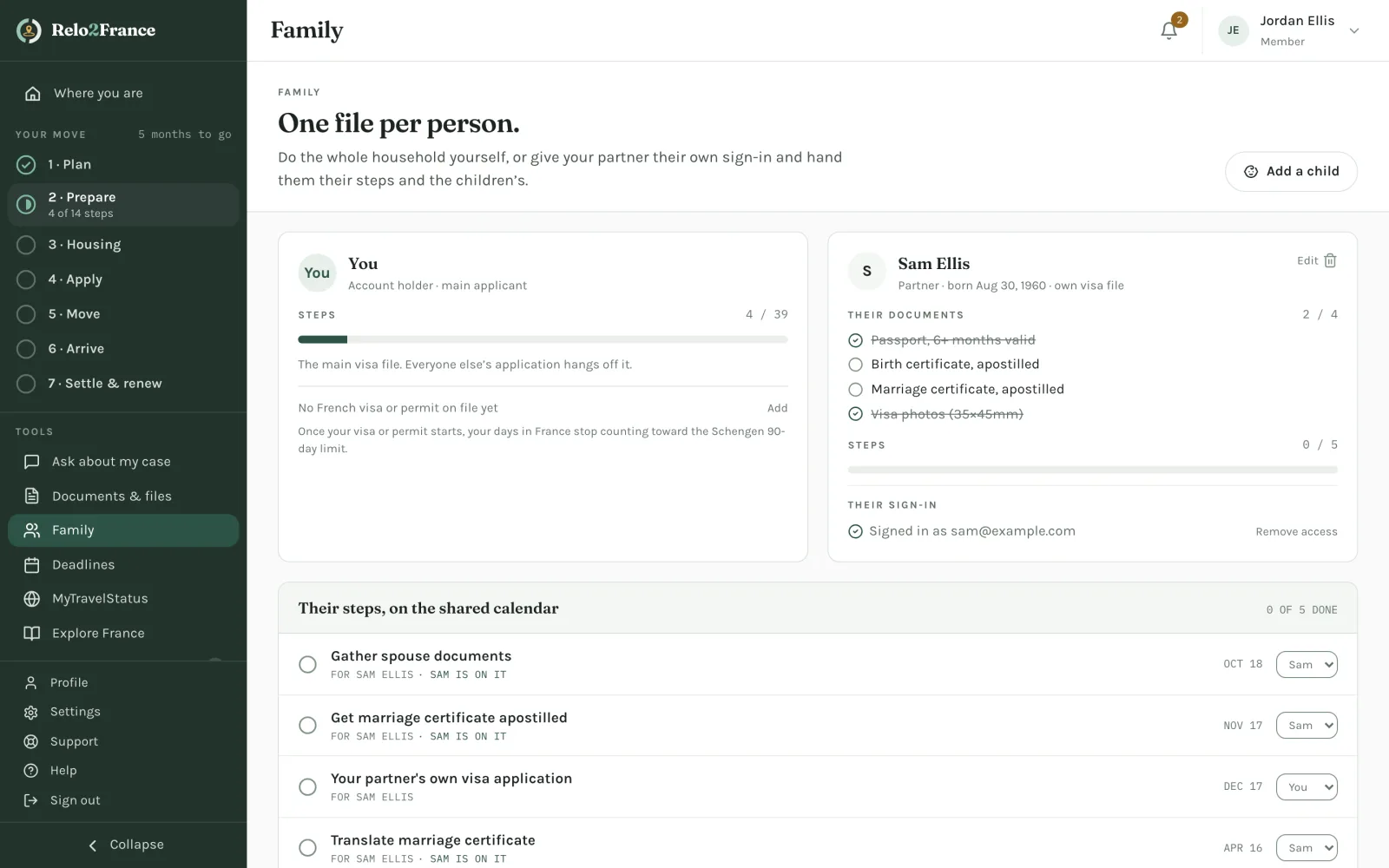
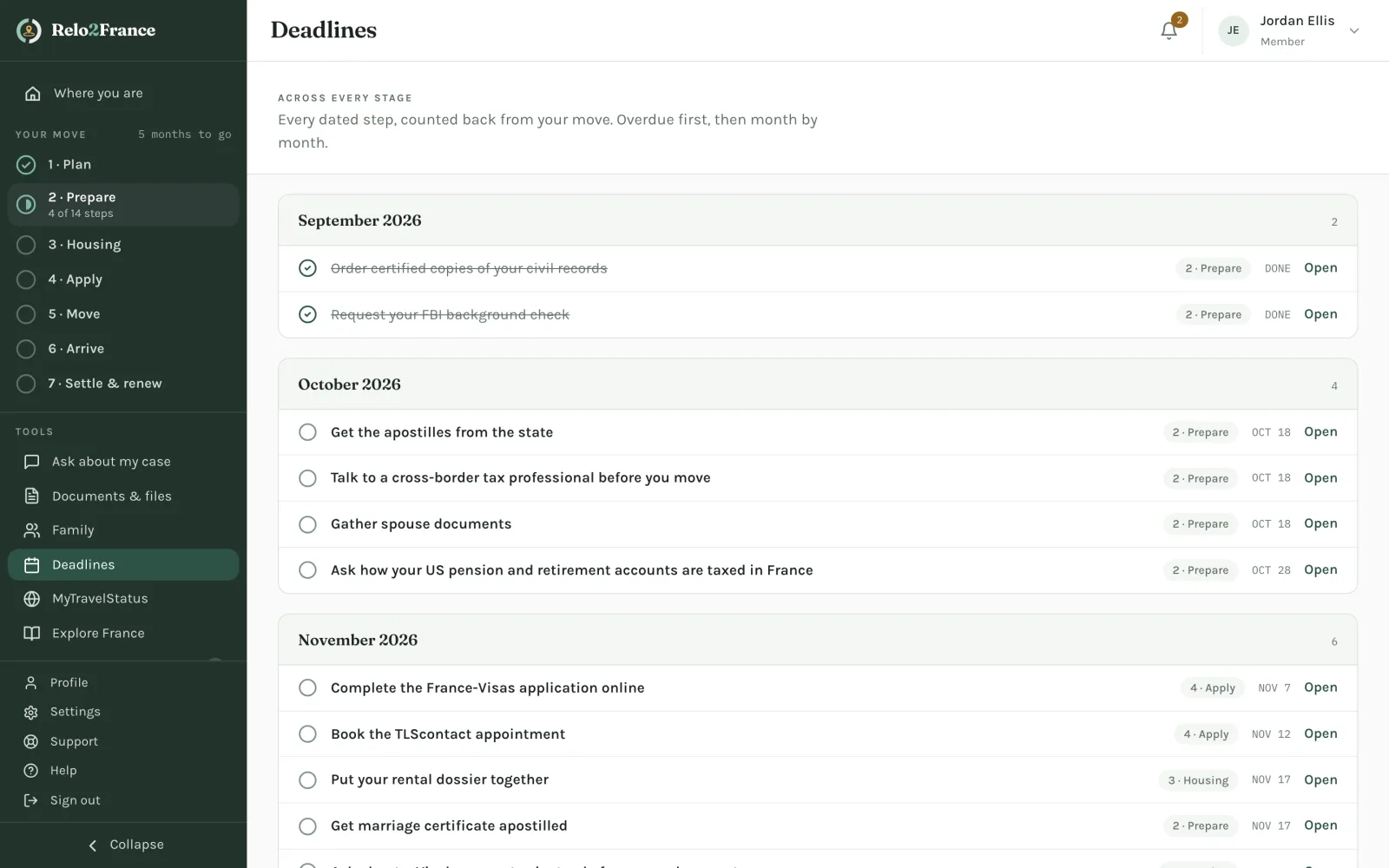
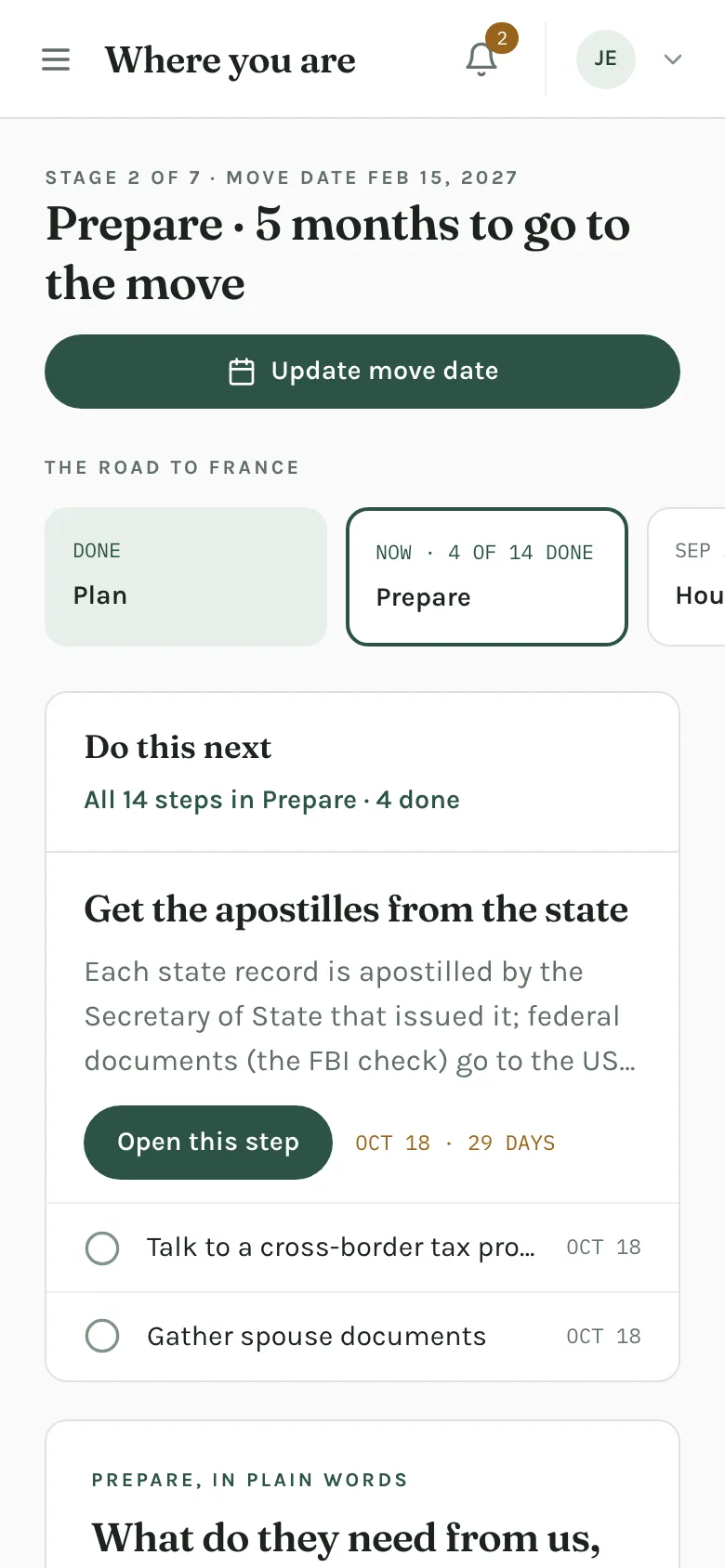
Screens show a sample household. No member’s information is ever shown.
What the free guides do, and where they stop
Each row is the same subject seen twice: what anyone can read, and what your own file does with it.
Ask about your own situation
The assistant knows your visa route, your dates, who is applying and what you have already gathered — so answers are about you, not about visas in general.
The guides answer the general question.
Your dossier, tracked
Every document the consulate will want, with what is done, what is outstanding and what needs an apostille first.
The guides list what is required.
Dated from your move
Tasks and deadlines counted back from your actual date, so you find out an apostille takes weeks while there is still time.
The guides say roughly when to start.
Documents drafted for you
The letters your visa route calls for, drafted from your profile as PDFs you can edit, download and sign: the cover letter, the declaration not to work, a statement of resources, and where they apply a host's attestation d'hébergement, a sponsor's attestation de prise en charge, an employer letter for remote work, a relationship statement or a business-plan outline.
The guides describe what each one has to say.
MyTravelStatus, included
The Schengen day tracker opens inside your portal, already signed in: log your trips against the 90-in-180 rule and see where you stand before you book. Every person in your household is counted separately, and once a French visa or permit starts, their days in France stop counting. Membership covers it; there is nothing else to buy.
The guides explain the rule.
Explore France
Location reports on a commune or a region, written against current official sources and saved to your file.
The guides cover the common cases.
How the information stays current
- Every knowledge-base topic is re-checked against official sources on a weekly schedule
- Proposed changes are reviewed by a person before anything is published — nothing updates itself
- Each guide shows the month it was last verified and the sources it rests on
- Questions the knowledge base answers badly are logged, researched, and reviewed the same way
$99 once. No subscription.
One payment, no subscription. Most moves take a year or more, and renewals in the middle of one are the last thing anybody needs.